THE MARGIELA FILES
2/15/2026
Author: Soukita
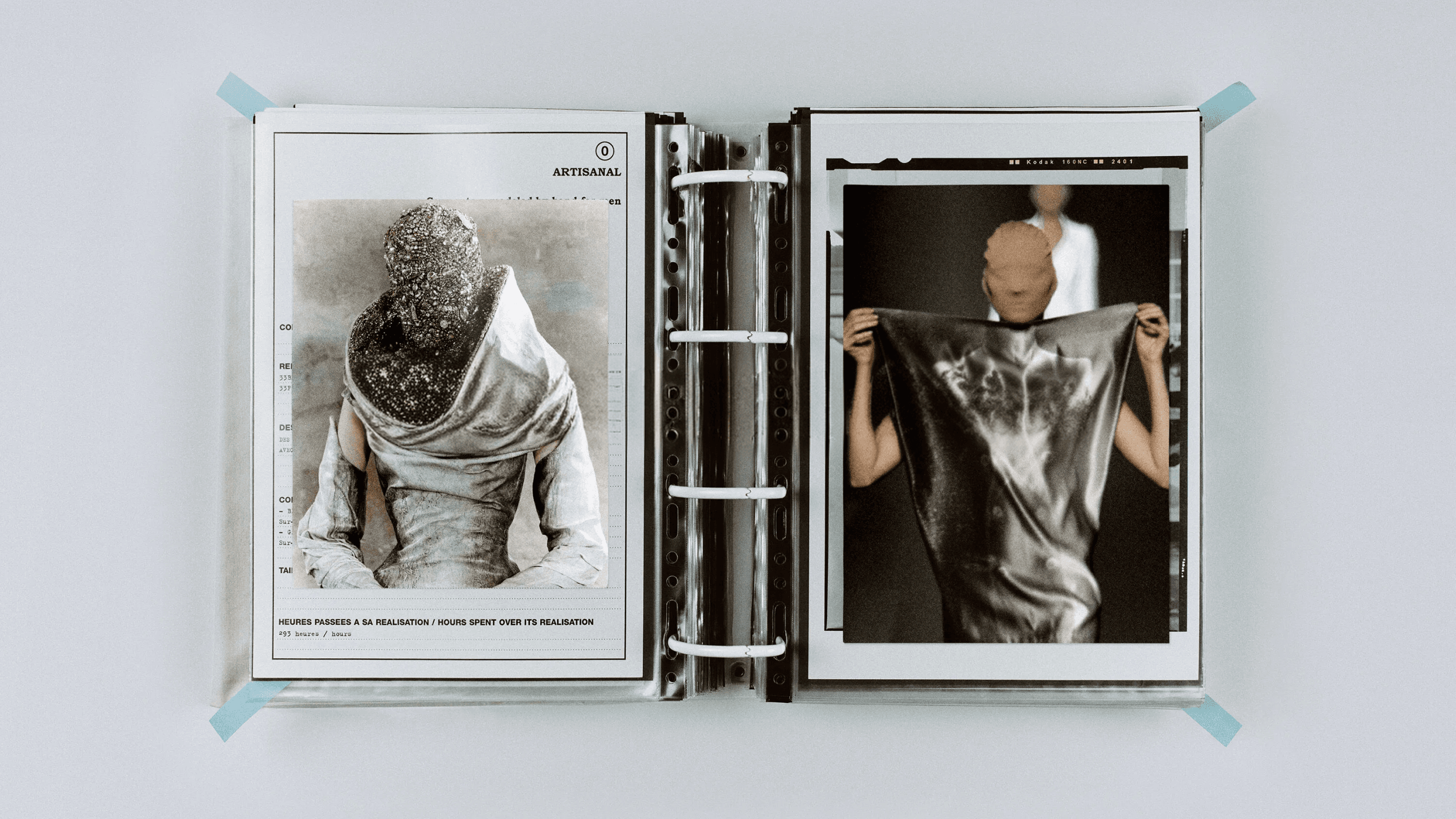
The announcement of Maison Margiela’s new MaisonMargiela/folders project this week is more than a digital update; it is a logical, inevitable evolution of the house's most fundamental principle: its archive. By launching a public Dropbox the brand has formally translated its original, rigorous, and famously opaque system of documentation into an era of radical digital transparency. This thesis is best understood by examining the visual evidence of the house's early communication, specifically the minimal and directory-driven aesthetic of its old official website.
This new project is not a break from the brand's history, but a digital reactivation of its core architectural principle: the folder.
Under the creative direction of Glenn Martens, who assumed the mantle in early 2025, Margiela is "unarchiving" its cloud. The initiative moves internal works off the SSD and into public circulation, opting for a downpour of raw process over the usual industry polish. This shift is a calculated evolution of the house’s notorious communication strategy: the anonymity once defined by “fax-era distance” has transitioned into a radical transparency, where the documentation of the work is presented as the product itself.
THE "OLD" LOGIC
If this feels like a rejection of gatekeeping, it is because Margiela has been rejecting celebrity as an organizing principle since day one. The house was founded in 1988 as an anti-star system project. In an era where the designer was becoming the brand, Margiela did the opposite, operating on a simple ethos: remove the face, keep the evidence.
The early archive was not romantic; it was clinical. The studio functioned less like an atelier and more like a laboratory, its internal system running on a strict logic of "white crates, white folders, references, and found objects filed like specimens." This environment of constant deconstruction and re-contextualization meant that documentation was paramount. Correspondingly, every garment was stripped of explicit branding and assigned a place on the now-iconic blank white label, where an encircled number (e.g., 0 for Artisanal) served as a micro-code for its line. This emphasis on technical detail was further reinforced in press materials, such as those for the Spring/Summer 2003 Women's Collection, which relied on the use of technical explanation cards with precise codes (like 3217225) instead of flowery descriptions.
THE EARLY WEBSITE
The Maison's first official website was perhaps the clearest public manifestation of this clinical logic. It intentionally mirrored the physical archive, functioning not as a glossy e-commerce platform but as a minimal, text-based directory. The preserved archives reveal a stark aesthetic where only collection numbers, dates, and technical codes mattered. The entire website structure was flat, with major sections for /collections/, /stores/, and /news/ presented in a manner akin to a simple file index or directory.
The visual experience was minimalist, enforced by simple CSS files like mmm.css, and the site's use of utilities like Ruffle (a Flash emulator) in your archived files suggests the content relied on technology that was sophisticated but purposefully devoid of typical commercial spectacle. This online experience, characterized by minimal visuals and technical language, was a clean, almost clinical database that perfectly reflected the house's intellectual, behind-the-scenes identity.
By refusing the spectacle of the commercial web, the early site confirmed that the brand’s intellectual value lay in the rigor of its documentation, not the extravagance of its marketing.
FOUR CITIES, FOUR CODES
The multi-city tour in China gives the digital Dropbox a physical counterpart. Each city hosts one foundational code, so the entire project reads like an archive you can walk through:
Shanghai – Artisanal: The Creative Laboratory
In Shanghai from April 2–6, Artisanal: The Creative Laboratory showcases 48 couture pieces spanning from 1989 to 2025. This exhibition highlights Margiela’s couture practice and invites visitors behind the scenes into the maison’s technical and creative processes, emphasizing experimentation, craftsmanship, and the development of ideas in the studio.
Beijing – Anonymity: Our History of Masks
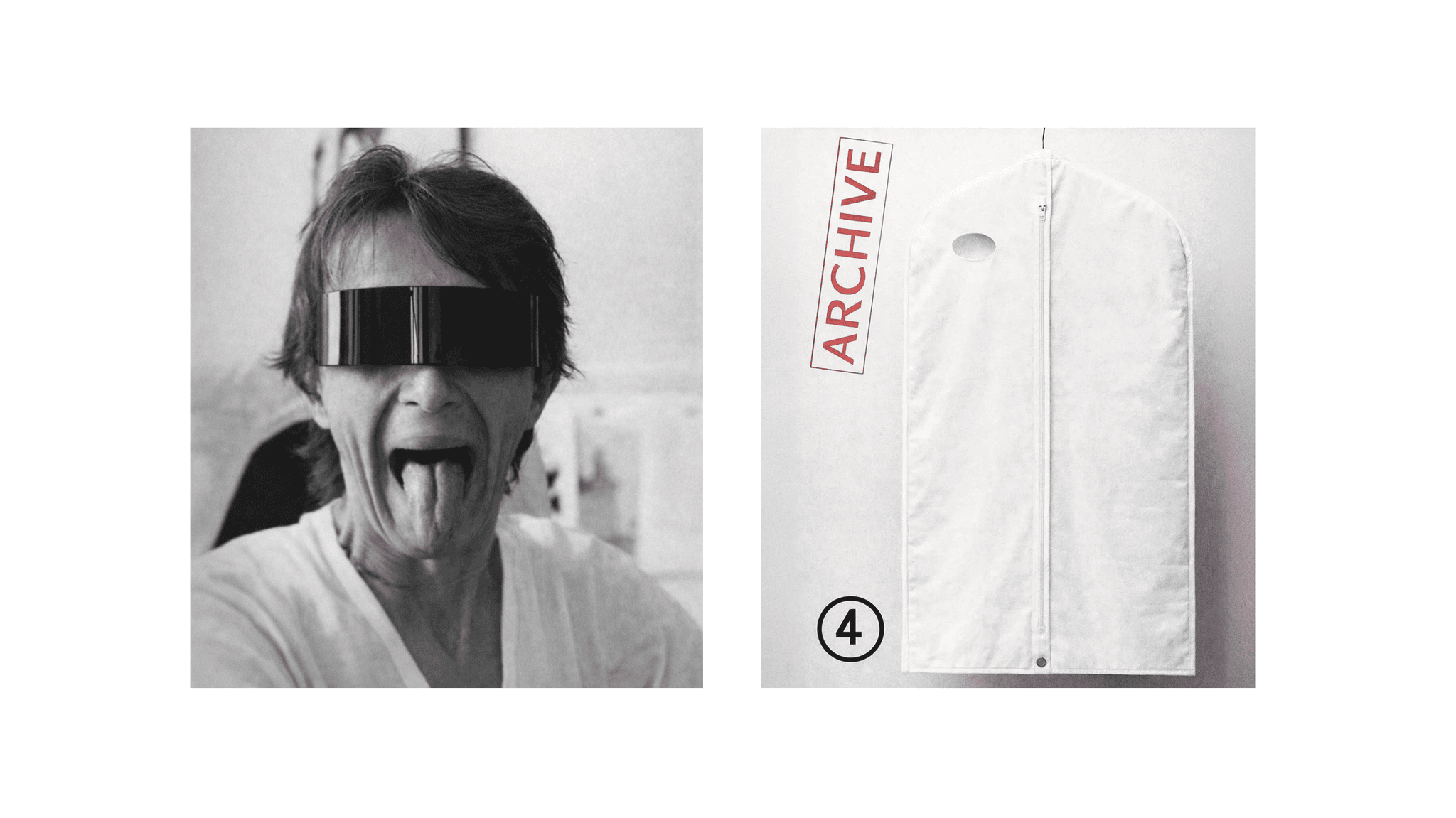
Running April 7–12 in Beijing, Anonymity: Our History of Masks explores one of the house’s most enduring themes — concealment and identity. The show traces the evolution of the iconic masks that Margiela has used in presentations and designs, reflecting the brand’s deliberate refusal of celebrity and focus on the work itself.
Chengdu – Tabi: Collectors
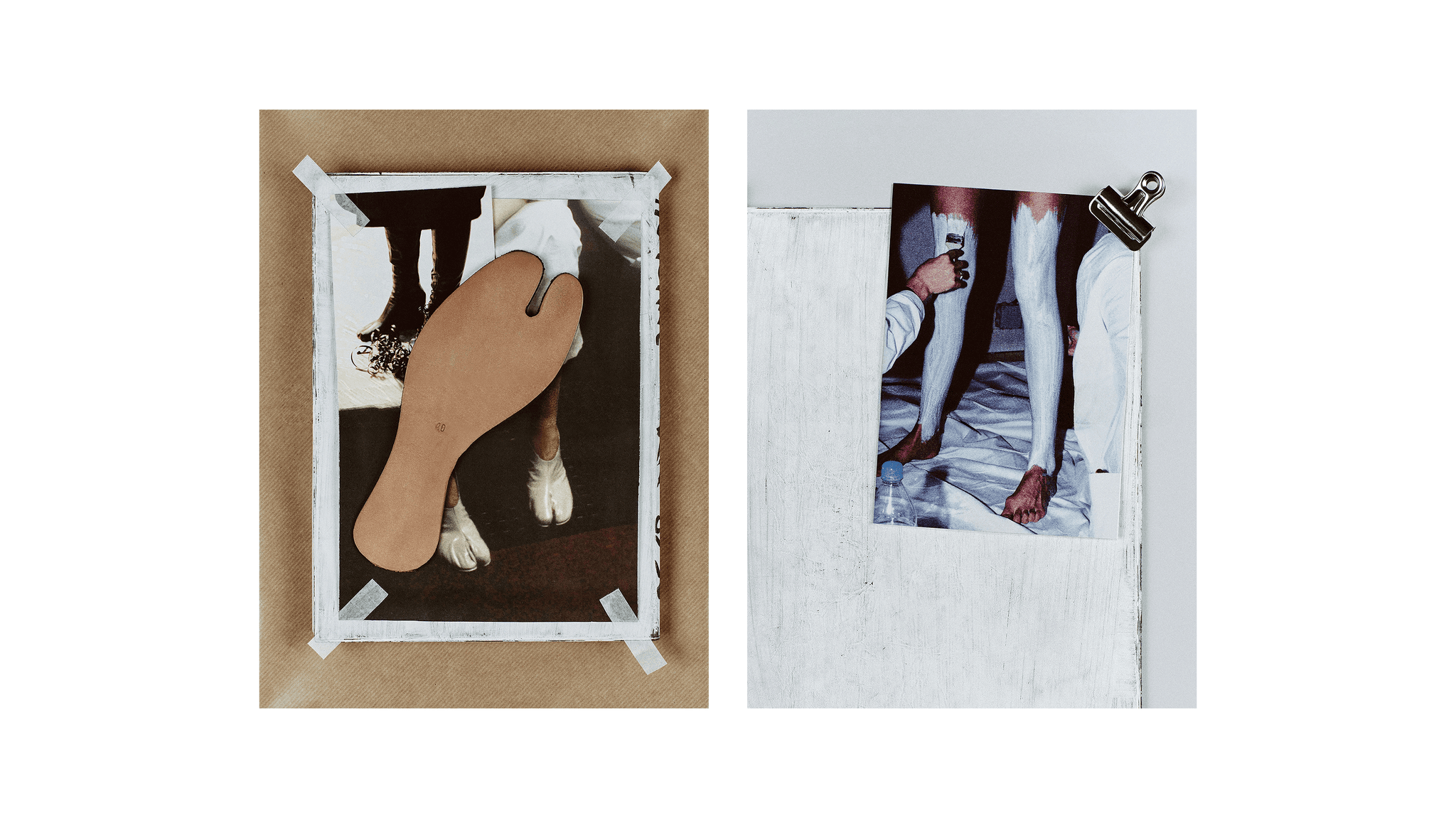
From April 9–13 in Chengdu, Tabi: Collectors brings together global collections of the Maison’s split-toe Tabi boot. This exhibition celebrates the cultural resonance of the Tabi — one of Margiela’s most recognizable designs — and the passionate community of collectors who have prized and preserved its variations over the years.
Shenzhen – Bianchetto: Atelier Experience
On April 11–12 in Shenzhen, Bianchetto: Atelier Experience focuses on the maison’s signature white overpaint technique known as Bianchetto. The experience emphasizes process and transformation, offering visitors an immersive atelier-style engagement with this unique Margiela creative language and its visualization of time in the making of garments.
GLENN MARTENS & CONTEMPORARY RECONSTRUCTION
The appointment of Glenn Martens as creative director in early 2025 has cemented this methodical approach, aligning closely with the founder’s original principles of deconstruction and industrial utility. Martens, a graduate of the Royal Academy of Fine Arts in Antwerp, has referenced archival signatures like the puffy jacket block from 1989 and the use of adhesive tapes.
He champions a "not precious" Belgian sensibility, contrasting it with traditional couture. This philosophy aligns with the house’s physical history: the 163 rue St Maur headquarters was formerly the École Professionnelle de Dessin Industriel (E.P.D.I.), grounding the brand’s identity in the language of technical drawing and industrial process.
The MaisonMargiela/folders project is the ultimate expression of this "non-precious" philosophy. By making the internal Dropbox public, Martens asserts that the most valuable asset of the house is not a specific luxury product, but the "ideas, codes, and values" that shape its work. The archive is not a treasure chest to be locked away; it is a set of "working tools" to be shared and explored.