RETURN OF THE ICONS: HOW ARCHIVAL FASHION ITEMS RE-ENTER THE MARKET
2/6/2026
Author: Soukita
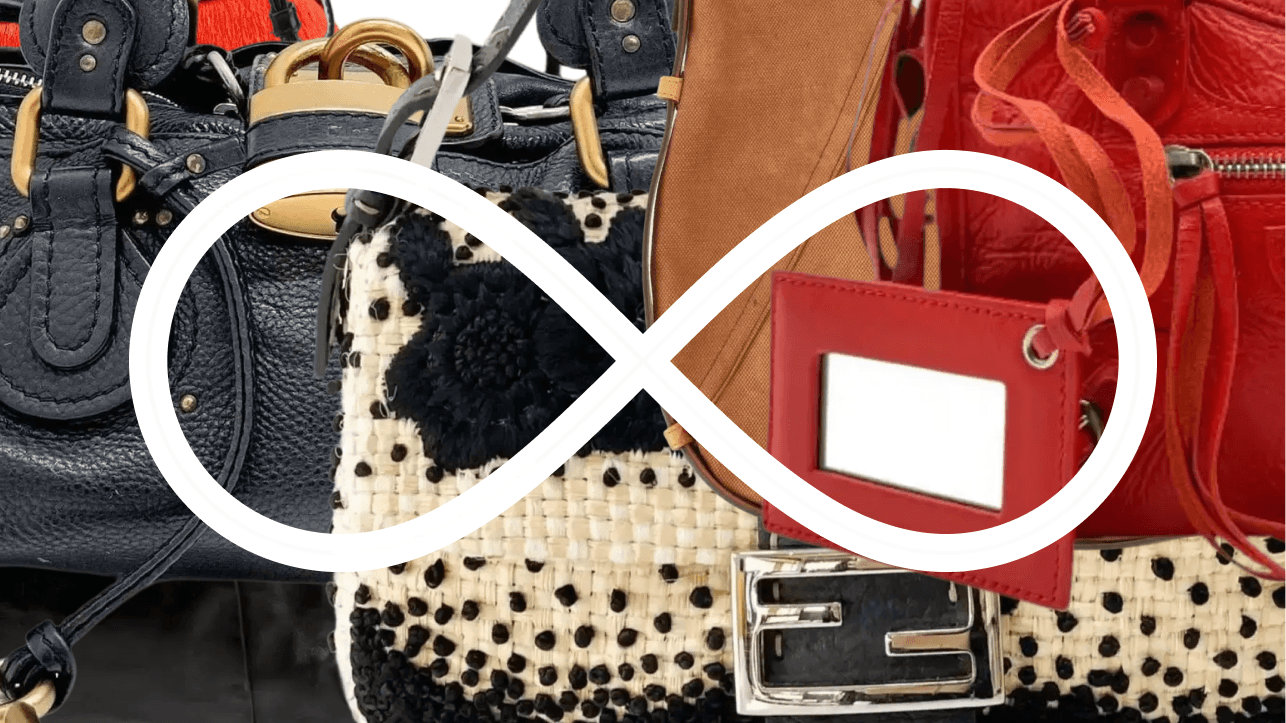
Archival fashion does not re-enter the market through a single channel. It returns through two routes that often operate at the same time: brand-led reissues and collector or reseller-driven circulation.
One route is top-down. A fashion house selects an existing design, reintroduces it, and uses campaigns, celebrity placement, and heritage framing to position it as relevant in the present.
The other route is bottom-up. Original pieces continue circulating through resale platforms, specialty boutiques, collector networks, and auctions. Demand builds visibly before a brand makes an official move. In many cases, the resale signal appears first.
Together, these routes form a feedback loop. Brands respond to demand that is already legible. Resale markets respond to renewed visibility. Icons return not through repetition, but through coordination between narrative, distribution, and proof of interest.
THE ARCHIVAL LOOP
A useful way to track how an archival item returns is to identify four elements:
- the item
- the trigger
- the channel
- the proof of demand
The proof may take different forms. In some cases, it is a campaign or runway moment. In others, it appears as increased search activity, sell-through, or resale price movement before a brand formally intervenes.
BRAND-LED REISSUES AND COMEBACK MECHANICS
When a brand orchestrates a comeback, it controls context. The original object is not framed as a past artifact, but as a current product with history attached. This control often shows up through casting, image language, visibility strategy, and scarcity structure.
Brands frequently anchor relaunches to figures associated with an item’s original cultural moment. In Fendi’s 2019 Baguette revival, Sarah Jessica Parker was positioned as a direct reference to Sex and the City and the bag’s early-2000s shorthand. Marc Jacobs used a similar approach when reviving the Stam, leaning into early-2000s association through casting that included Paris Hilton alongside Ashanti, Selma Blair, and Jessica Stam.
Some relaunches prioritize density of visibility rather than subtle narrative framing. Dior’s 2018 Saddle revival followed this approach, with the bag appearing across numerous feeds simultaneously and framed around the hashtag #DiorSaddle. Resale platforms reported increased consignment activity during the same period, aligning with the relaunch window. Other brands embed the past directly into visual logic. Balenciaga’s 2024 Le City framing referenced early-2000s paparazzi imagery, placing the bag inside an archive-coded environment that echoed its original circulation rather than translating it into a new aesthetic.
Milestones also provide a built-in structure for return. In 2022, Fendi marked the Baguette’s 25th anniversary with a runway presentation and a campaign fronted by Linda Evangelista, photographed by Steven Meisel. The anniversary format also supported limited designs and collaborations, including a release with Tiffany & Co. Not every revival is announced directly, however. Some appear through recognisable objects placed inside contemporary images with minimal explanation. Saint Laurent’s Spring 2026 presentation included the Mombasa bag styled on Bella Hadid without a formal relaunch announcement, relying on recognition rather than messaging to activate demand.
A relaunch still has to function as a product, not only as an image. This is where change tends to happen, even when the silhouette remains familiar. Core visual elements are usually retained, while updates reflect contemporary sourcing, manufacturing constraints, or expected wear. In the case of the Mombasa, original horn references were adapted into more standardized handle treatments. Balenciaga’s Le City reissue retained its recognizable shape while adjusting hardware and structure for contemporary use.
Reissues also tend to arrive as a range, not a single object. Multiple sizes and versions allow the same design language to fit current usage patterns. The Chloé Paddington return included size and format expansion, while Marc Jacobs introduced the Little Stam as a scaled reinterpretation of the original. Limited runs are also common. They allow brands to test demand while maintaining scarcity. Under Gabriela Hearst, Chloé’s Edith reissue began with limited production before broader release. Relaunches often include a material narrative as well, particularly when a house wants the reissue to reflect contemporary standards. Prada’s Re-Edition nylon line emphasized recycled materials, while sustainability-linked updates were incorporated into the Edith’s reintroduction. Many changes are framed quietly as refinement rather than listed as technical upgrades.
WHY THE MARKET RESPONDS
Archive returns tend to succeed when three conditions overlap: recognizable cultural memory, current trend alignment, and proof of demand. Late-1990s and early-2000s nostalgia has played a major role in making certain silhouettes legible again, setting the stage for returns such as Le City. Items with established cultural status also re-enter the market with reduced friction. When the name and shape are already known, adoption tends to move faster. Early demand around the 2025 Paddington return, including “low in stock” signals shortly after release, reflects this effect.
Heritage framing can strengthen brand loyalty while also inviting scrutiny. As a result, many relaunches introduce visible adjustments in styling, materials, or variants, even when the core form remains intact. The object stays recognizable, but the release avoids reading as a simple replay.
COLLECTORS AND RESELLERS DRIVE RESURGENCE
Alongside official relaunches, archival items continue circulating through resale ecosystems that operate independently of brands. Over the past decade, resale platforms have become primary sites of demand visibility, particularly for Y2K-era items. In many cases, this is where early signals emerge before a runway or campaign moment.
Specialty boutiques and online curators operate as editors rather than distributors. Stores such as Resurrection Vintage and Byronesque shape archive value through selection and context. Auction houses formalize archival value at the highest tier. Sotheby’s and Christie’s now run dedicated fashion sales, including estate-focused auctions such as the Iris Apfel collection. High-profile results reinforce fashion’s position as a collectible asset. Reissues can also affect the perceived value of originals, with resale prices sometimes rising temporarily following renewed brand attention.
Community also plays a role. Collectors and enthusiasts function as informal historians, circulating references and context. Brands sometimes respond with archive-facing initiatives such as sales, rentals, or institutional programs, including Jean Paul Gaultier’s archive activity. The same loop appears at accessible price points as well. Coach’s Originals line and (Re)Loved repair program, Kate Spade reissues, and retro sneaker releases from Nike show how archive logic operates across tiers.
CASE AND POINT
Le City, 2024
Balenciaga framed the Le City return through early-2000s paparazzi-coded imagery, keeping the bag’s existing cultural context intact while updating details for contemporary production. Around the relaunch window, coverage and resale chatter linked the bag’s renewed visibility to the broader Y2K cycle and reported increases in search interest.
Baguette, 2019 and 2022
Fendi reactivated the Baguette through direct continuity, positioning Sarah Jessica Parker in 2019 as a reference to Sex and the City and the bag’s early-2000s shorthand. In 2022, the 25th anniversary structured a runway moment and campaign imagery, including a Steven Meisel shoot with Linda Evangelista and limited variations such as a Tiffany & Co. collaboration.
Saddle, 2018
Dior’s Saddle revival relied on coordinated digital visibility, amplified by variations that made the design easy to re-enter wardrobes at scale. Resale reporting from the period aligned the relaunch with increased consignment activity, suggesting platforms responded quickly to renewed demand.
Paddington, 2025
Chloé brought the Paddington back within a broader brand moment tied to creative direction and early-2000s recognition cues in styling and rollout. Early sell-through indicators, including “low in stock” signals shortly after release, were cited as evidence of immediate market response.
Mombasa, Spring 2026
Saint Laurent’s Mombasa reappearance was handled quietly, relying on recognition rather than announcement as it was styled on Bella Hadid in Spring 2026 coverage. Production choices focused on preserving the core silhouette while adapting handle options and materials for contemporary release.
Jackie, 2020 and 2023
Gucci’s Jackie is a long-running house silhouette first created in 1961, later associated with Jacqueline Kennedy through repeated public photographs and subsequent naming. Alessandro Michele reintroduced his version, the Jackie 1961, in Gucci’s Men’s Fall/Winter 2020 show, and the bag continued to be activated through brand imagery and campaigns, including a chapter fronted by Dakota Johnson photographed by Glen Luchford
Archival items re-enter the market when they become legible again to contemporary buyers and when distribution makes that legibility actionable. This can occur through brand control or through resale circulation that builds pressure over time.
The key point is not that the archive is being repeated. It is that the archive is being used as an operating system for demand. Brands relaunch proven forms, while resale networks keep originals active and measurable. In practice, the two routes feed each other. A relaunch can lift the value of originals. A collector-driven spike can motivate a relaunch. Icons return when narrative alignment and market conditions converge.